Specialist Biohazard Cleansing and Purification for Blood, Bodily Fluids, and Hazardous Products
The possible health dangers linked with exposure to biohazards highlight the critical requirement for careful handling and extensive cleaning. As we navigate the elaborate landscape of biohazard cleaning, understanding the nuances of guidelines, conformity, and the specialized devices at play ends up being imperative in guaranteeing a comprehensive and risk-free purification procedure.
Health Risks of Biohazard Exposure
Exposure to biohazards presents substantial wellness risks that can result in severe repercussions for individuals and neighborhoods alike. Biohazards incorporate a wide range of biological substances, including blood, bodily fluids, mold, bacteria, viruses, and various other possibly transmittable products. When people enter into call with these biohazards, whether via crashes, improper handling, or ecological direct exposure, they deal with the threat of contracting significant ailments or conditions.
Among the key wellness dangers connected with biohazard direct exposure is the transmission of transmittable diseases. Bloodborne pathogens such as HIV, liver disease B and C, and numerous germs can be present in biohazardous materials, posing a direct threat to human health and wellness. Inhaling airborne biohazards like mold and mildew spores or coming right into call with contaminated surfaces can additionally lead to respiratory concerns, allergic reactions, and other adverse wellness impacts.
Moreover, biohazard exposure can have lasting health and wellness ramifications, with some diseases manifesting years after the initial call (Blood Cleanup). Consequently, it is vital to prioritize correct biohazard cleansing and decontamination to minimize these health and wellness risks and make sure the safety of people and areas

Specialized Training for Biohazard Clean-up
When it involves dealing with biohazard cleaning efficiently and safely, specialized training plays an essential duty in guaranteeing appropriate purification treatments are followed. Biohazard clean-up needs particular understanding and skills to effectively reduce risks related to bloodborne virus, physical liquids, and hazardous materials. Experts educated in biohazard clean-up undergo extensive direction on just how to securely take care of, remove, and throw away biohazardous products to stop contamination and direct exposure.
Specialized training for biohazard cleaning covers a range of crucial topics, including appropriate personal protective equipment (PPE) usage, bloodborne pathogen awareness, decontamination methods, and contaminated materials disposal methods. Individuals trained in biohazard cleanup are geared up with the required experience to analyze contamination degrees, determine prospective risks, and execute proper cleanup procedures in conformity with regulative standards.
Continuous training and education are vital in the field of biohazard cleanup to remain upgraded on the most up to date purification innovations, safety methods, and guidelines. By investing in specialized training, biohazard cleanup specialists can successfully reply to emergency situation cleanup situations and safeguard both public health and wellness and the atmosphere.
Importance of Correct Decontamination Techniques
Making use of appropriate decontamination methods is important in biohazard cleanup to successfully remove dangerous products and lessen health threats. Efficient purification not only makes certain the removal of noticeable traces of blood, bodily liquids, and other biohazards yet additionally targets unnoticeable virus that may present serious wellness threats if not properly eliminated. By adhering to strict purification procedures, educated professionals can dramatically decrease the danger of direct exposure to harmful microbes, infections, and bacteria that might bring about diseases or infections.
Proper decontamination strategies entail the use of specific tools and anti-bacterials that are specifically developed to neutralize biohazards properly. Detailed cleaning and disinfection of polluted areas are important to prevent the spread of pathogens and ensure a risk-free setting top article for owners. In addition, the correct disposal of biohazardous waste following decontamination procedures is important in stopping contamination of various other surface areas or individuals.
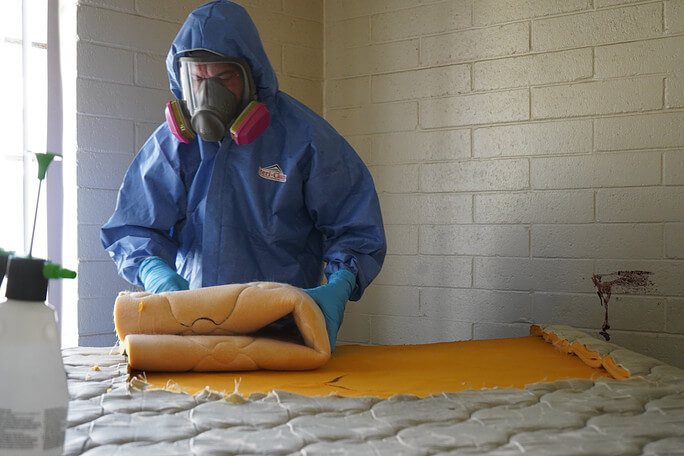
Equipment and Devices for Safe Cleaning
When dealing with blood, bodily liquids, or hazardous materials, biohazard cleansing professionals depend on specialized equipment to minimize exposure dangers and extensively decontaminate the afflicted location. Additionally, biohazard cleansing packages containing disinfectants, absorbing materials, and biohazard bags are used to securely get rid of and consist of of contaminated things.
Advanced cleaning tools like hospital-grade disinfectants, HEPA-filtered vacuum cleaners, and fogging makers are used to disinfect surface areas and remove biohazards successfully. Specialized tools such as sharps containers and biohazard garbage disposal bins are utilized to safely handle sharp items and biohazardous waste products. By making use of the appropriate equipment and tools, biohazard cleaning professionals can guarantee a comprehensive clean-up process that focuses from this source on security and decreases wellness threats for both employees and owners of the affected space.
Regulations and Conformity in Biohazard Cleansing
Correct adherence to laws and conformity criteria is extremely important in biohazard cleansing to guarantee the security of both workers and the environment. Government agencies such as OSHA (Occupational Safety and Wellness Management) and the EPA (Environmental Security Agency) have established certain guidelines for biohazard cleanup procedures to minimize wellness threats and environmental contamination. These policies cover a variety of aspects including the handling, transportation, and disposal of biohazardous materials, as well as the essential training and safety devices required for employees entailed in the clean-up process.
Biohazard cleansing business should remain current with these laws to ensure that their procedures satisfy the needed security standards. Failing to abide by these regulations can cause serious consequences, consisting of fines, lawsuit, and jeopardizing the health and wellness of individuals and the environment. By complying with rigorous laws and compliance actions, biohazard cleansing firms can properly minimize risks and guarantee a secure and comprehensive cleaning process for all events involved.
Conclusion
In verdict, biohazard cleaning and decontamination call for specialized training, correct techniques, and adherence to guidelines. Direct exposure to blood, bodily liquids, and hazardous materials presents significant health and wellness threats, making it essential to make use of the right devices and devices for secure cleanup. By complying with rigorous procedures and guidelines, experts can successfully mitigate the dangers related to biohazard direct exposure and ensure the security of both themselves and others.
As we browse the detailed landscape of biohazard cleaning, get more understanding the nuances of policies, conformity, and the customized tools at play comes to be critical in guaranteeing a comprehensive and safe decontamination process. (Blood Cleanup)
When it comes to managing biohazard clean-up effectively and securely, specialized training plays an essential duty in making sure correct purification treatments are followed.Making use of proper decontamination techniques is essential in biohazard cleanup to effectively minimize and remove unsafe materials health risks. Additionally, biohazard cleansing packages consisting of disinfectants, absorptive materials, and biohazard bags are made use of to securely dispose and have of infected products.
Federal government companies such as OSHA (Occupational Safety And Security and Health Management) and the EPA (Environmental Defense Company) have developed certain guidelines for biohazard cleaning treatments to reduce health threats and environmental contamination.